Quick answer
Start eight weeks out by deciding hosting, budget, and who buys for whom. Buy bigger gifts around Black Friday (November 27, 2026), mail cards three weeks before, and leave only fresh food for the last two days. Give every job one owner.
Christmas goes wrong in the same three places every year: the shopping starts late, the jobs live in one person's head, and the big choices (who hosts, what the budget is) get made in a rush. This checklist spreads the work across eight weeks and puts a name next to every job.
Copy the parts you need into your own plan. In FamHead, purchases go on the shared shopping list, jobs become tasks with an owner, and open questions such as "are we hosting?" sit in decisions until you record what you agreed.
Decide these before you buy anything
Most last-minute stress comes from choices nobody made. Settle these first, ideally by the end of October:
- Where you spend Christmas Eve and Christmas Day, and who hosts
- The total gift budget, and a per-person limit for the wider family
- Who buys for whom, or whether you draw names for a Secret Santa
- The menu for the main meal, and who cooks each part
- Travel dates, and whether anyone needs a ride
- Which traditions you keep this year and which you drop
Each of these is a household decision rather than a task. Write the question down, list the options, and agree on an answer before anyone starts ordering.
The eight-week Christmas timeline
| When | What to do | Easy to forget |
|---|---|---|
| 8 weeks before | Make the decisions above. Start each person's private gift ideas list. | The budget |
| 6 weeks before | Book travel, order photo gifts and personalized cards, check last year's decorations | Anything personalized, which takes longest |
| 4 weeks before | Buy the bigger gifts (Black Friday is November 27, 2026) and the wrapping supplies | Batteries for new toys |
| 3 weeks before | Write and mail cards, send packages abroad, order the turkey or main dish | International shipping |
| 2 weeks before | Check your carriers' last shipping dates, buy stocking stuffers, confirm guests | Allergies and dietary needs |
| 1 week before | Buy drinks and pantry food, wrap gifts, plan where everyone sleeps | Spare bedding and towels |
| 2 days before | Fresh food shop, thaw what needs thawing, charge devices | Ice and trash bags |
| Christmas Eve | Set the table, prep vegetables, put out gifts | One last-minute gift |
| After Christmas | Make returns, write thank-you notes, pack decorations away | Where the decorations went |
The shared Christmas shopping list
These are the purchases a household usually shares. Put them on one list everyone can add to, so whoever notices the tape has run out writes it down.
- Wrapping paper, gift bags, tape, and gift tags
- Christmas cards and stamps (count your card list first)
- AA and AAA batteries, enough for every new toy
- Spare bulbs or a replacement string of lights
- Advent calendars, if you buy them
- Food for the main meal, split into "buy early" and "buy fresh"
- Drinks, mixers, and ice
- Baking supplies: flour, butter, sugar, foil, parchment paper
- Candles and napkins for the table
- Trash bags and containers for leftovers
Add quantities while you are thinking about them. "Wrapping paper, 3 rolls" saves a second trip; "paper" does not.
Give every job an owner
Buying things is the visible half of Christmas. The other half is everything around the purchases, and it tends to land on one person. Turn each of these into a task with a name and a date:
- Confirm who is coming and when they arrive
- Collect dietary needs and allergies
- Book or confirm travel and parking
- Mail cards and international packages
- Get the decorations down and test the lights
- Order and pick up the main dish
- Get the guest room ready
- Handle returns and thank-you notes afterwards
If one person owns a job, they own all of it: remembering, doing, and following up. "I'll do the cards" should mean buying, writing, stamping, and mailing them, not waiting to be asked.
How to run this in FamHead
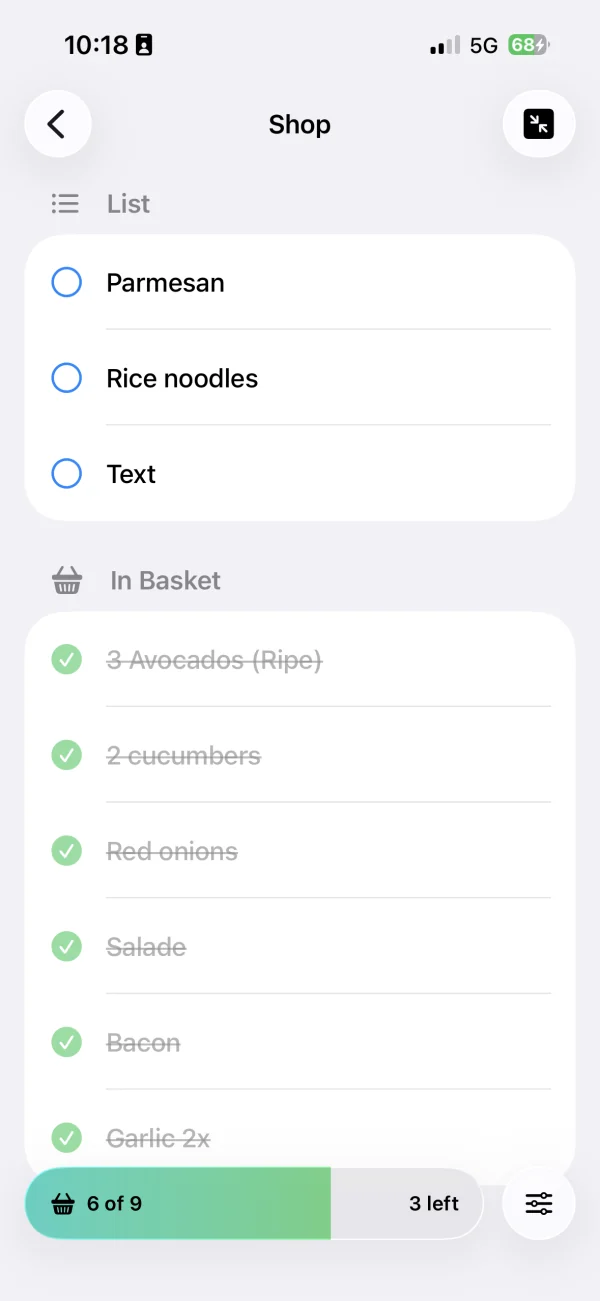
- Shopping: the items above go on the household shopping list. Whoever is at the store checks them off, and everyone sees what is left.
- Tasks: each job from the owner list becomes a task for one person, with a due date.
- Decisions: hosting, budget, and the menu start as decisions with the people involved. Record the outcome once you agree, then add the tasks that follow.
- Inventory: when you pack the decorations away in January, record which box and shelf they went to. Next December, nobody has to search the attic.
- Voice: after a long call with the grandparents, say everything you agreed in one go ("Mom is bringing dessert, we need six more chairs, and Tom will pick them up"). FamHead suggests a task for Tom and a shopping item, and you review them, adding any dates, before saving.
Frequently asked questions
When should you start Christmas shopping?
Make the big decisions eight weeks ahead, in late October, and buy larger gifts around Black Friday (November 27, 2026). Leave fresh food for the last two days. Personalized gifts and anything shipped from abroad need the most time.
How do you keep gift surprises secret on a shared family list?
Keep them off it. Everyone in a FamHead household can see the shared shopping list, so keep secret gifts in a private note on your own phone, or use a gift-list app such as Giftster when relatives need to reserve presents without the recipient seeing.
How do you split Christmas jobs fairly between parents?
List every job, including the planning ones, then give each a single owner who handles it from start to finish. Check the split a few weeks in. In FamHead, the Mental Load view shows how many open commitments each person holds, so an uneven split is easy to spot.
What do families forget most often at Christmas?
Batteries, tape, stamps, ice, and trash bags, along with confirming dietary needs and checking last shipping dates. The timeline above puts each of them in the week it matters.