Compare answers
Couples often see the split differently. The jobs you both think you handle are where invisible work hides.
Free family tools
Answer 24 quick questions about who keeps track of everyday family life. See your share, then hand the phone to your partner and compare. It takes about five minutes, and your answers stay on this device.
For each job, think about who notices it needs doing, plans it, and makes sure it happens. Not who does the physical work.
The mental load is the thinking work behind family life: noticing what needs doing, planning it, deciding, and checking it got done. This test asks who does that thinking for 24 everyday jobs, not who does the physical chore.
It follows sociologist Allison Daminger’s description of cognitive household labor in four steps: anticipating a need, identifying options, deciding, and monitoring the result. Your score is the share of those jobs you keep track of, counting shared jobs as half. It’s a starting point for a conversation, not a clinical measure.
Daminger, The Cognitive Dimension of Household Labor, American Sociological Review (2019)
Couples often see the split differently. The jobs you both think you handle are where invisible work hides.
Move one complete responsibility, including the remembering, rather than asking for help with single steps.
Ten minutes a week to look at what’s coming up and who owns it keeps the balance from drifting.
 FamHead
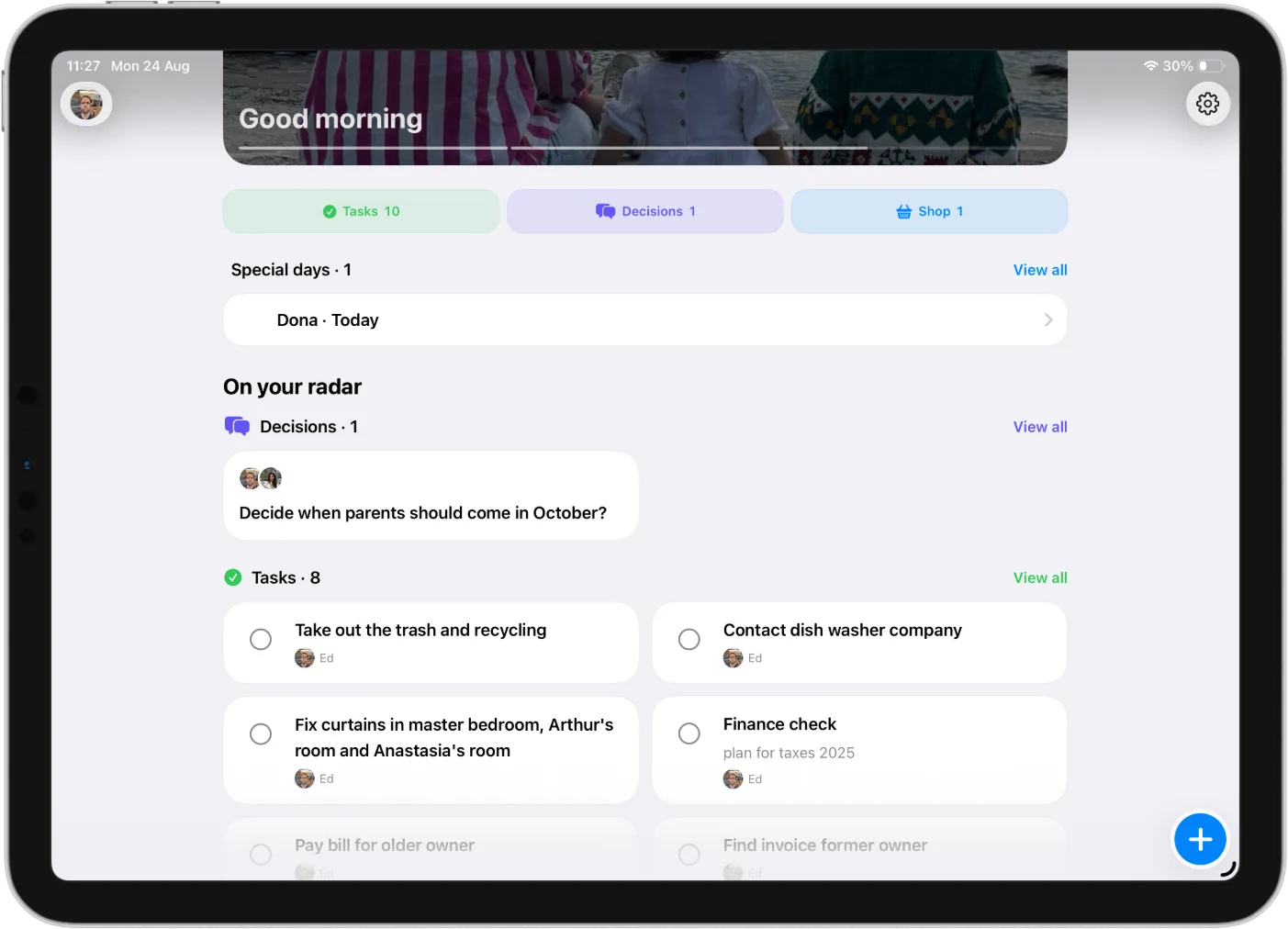
 puts a name on every household task and decision, and its Mental Load view shows how many each of you is holding.
Download on theApp Store FamHeadScan to downloadApp Store