
A useful place to start
Make the noticing and planning visible, then agree who will own each responsibility from start to finish. Record the next actions and revisit the arrangement after a week.
The school form is due tomorrow. Someone needs to notice the email, find the form, check the details, get a signature, and make sure it reaches the teacher. Returning it may take five minutes. Keeping it from being forgotten involves more work than those five minutes suggest.
That is the part of family life people often mean when they talk about the mental load: remembering what needs attention and carrying the responsibility for what happens next.
To share the mental load at home, start by making that work visible. Then agree who will own each responsibility, including the planning and follow-through. A shared list helps when everyone also takes responsibility for keeping it useful.
Look at the work behind each chore
In her research on household labor, sociologist Allison Daminger describes cognitive work as anticipating needs, considering options, making decisions, and monitoring progress. These are parts of running a household that can be easy to miss when you only count completed chores. Read the study in American Sociological Review.
Consider a child's birthday invitation. There is the visible job of buying a gift. Around it, someone also checks whether the family can attend, replies to the invitation, works out what gift would suit, remembers the wrapping, and confirms transport.
If one adult handles all that planning while another buys the gift after being asked, both have contributed. The responsibility for keeping the whole job moving still sits with the first person.
Choose a few examples from your own home. School supplies, laundry, groceries, repairs, and family visits are useful starting points. For each one, ask:
- Who notices that something needs to happen?
- Who works out the options and makes the plan?
- Who carries out the job?
- Who checks that it is finished or follows up when something changes?
Use the answers to understand your current arrangement. You can decide what to change once you can both see it.
Make a small responsibility audit together
Each adult should make their own list before you compare notes. Include the things you remember during a commute or while doing another job: checking whether shoes still fit, arranging a repair, replying to school messages, or noticing that supplies are running low.
If you'd like a quick starting point, take our free mental load test separately and compare your answers. Keep the first audit manageable. Choose six to ten responsibilities that come up regularly or are taking up attention this week. You can add more later.
Copy this worksheet into a shared note or print it. Fill the middle columns independently, then discuss an agreed owner for each responsibility.
| Responsibility | Who notices and plans now | Who does and follows up now | Agreed owner |
|---|---|---|---|
| School messages and forms | |||
| Groceries and household supplies | |||
| Laundry and clothes that need replacing | |||
| Repairs and maintenance | |||
| Family invitations and gifts | |||
| Your own example |
Different answers are worth discussing. One person may see a completed job while the other remembers the phone calls, reminders, and changes behind it. Describe a recent example so you are talking about the same work.
Transfer a whole responsibility
An agreement such as “I'll help with school things” leaves a lot open. Be specific about what someone is taking on.
For example: “I'll own school forms this month. I'll check the messages, note the deadlines, ask you when we need a joint answer, and make sure the forms are returned.”
The other adult may still need to sign something or discuss a choice. The owner remains responsible for spotting when that input is needed and following through afterward.
When you hand over a responsibility, share the information needed to carry it out: where messages arrive, which supplies matter, and any existing commitments. Agree on what completion means, then give the new owner room to choose how to get there.
Some responsibilities need joint decisions. You can still agree who will gather the information and bring the choice back to the household.
Put agreements somewhere everyone can check
Write down the next action and its owner. “School trip” is a topic. “Return the signed school trip form by Thursday” is an action someone can complete.
In FamHead, you can keep household tasks shared and assign an owner. The mental-load overview shows how open tasks are assigned, which tasks still need an owner, and decisions awaiting household input. That gives you something concrete to review together.
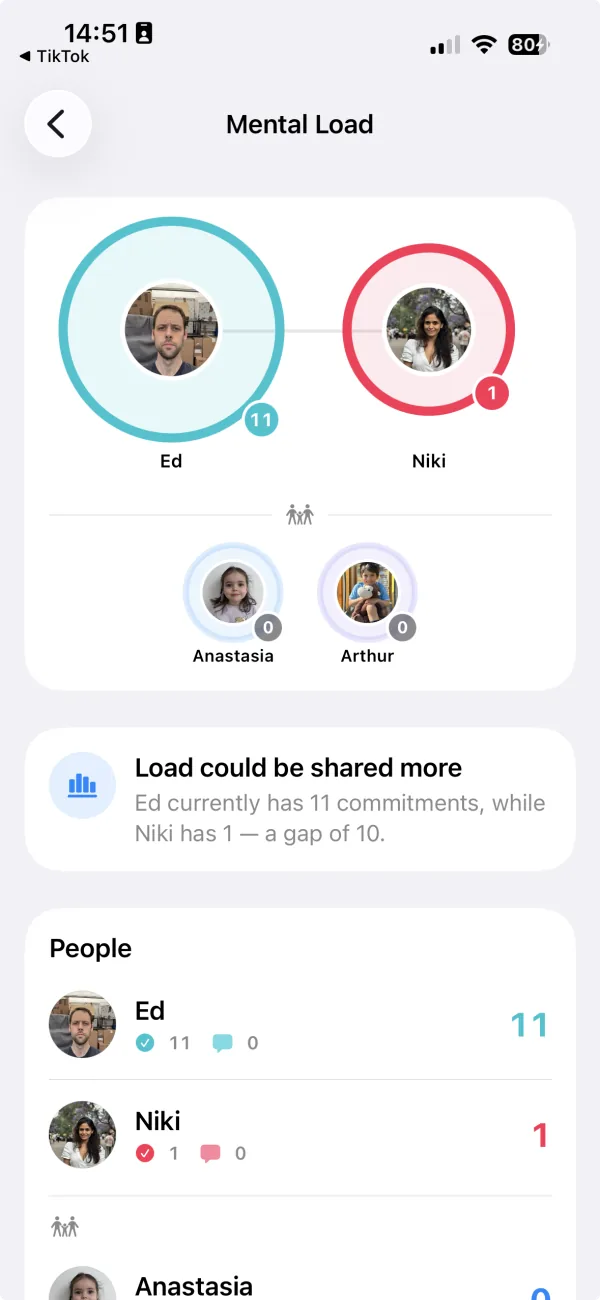
Use that view alongside your conversation. A short shopping task and a complicated repair can appear as one task each while requiring very different effort. You also need to discuss responsibilities that have not made it onto the list.
Check the arrangement after a week
Set a short time to revisit the responsibilities you changed. Ask whether the new owner has the information they need, whether someone is still doing the reminding, and whether this week's demands call for a different split.
If something was missed, work through the specific problem. A missing login, an unclear deadline, or a task that depends on another person may need a practical fix. If the agreed ownership has quietly returned to the original person, bring that back into the conversation too.
You can use a weekly family planning routine to keep this review brief. If the audit reveals an uneven chore split, move on to dividing household chores fairly. To keep the new arrangement going, set up a simple household management system with one owner per task.
For a first step today, pick one recurring responsibility and agree who will notice, plan, do, and follow up on it for the next week.