
A useful place to start
Use three minutes for dates, five for next actions, four for meals, five for decisions, and three to confirm the plan. Give each adult responsibility for checking and maintaining their part of the week.
On Monday morning, the family discovers that a school trip needs a packed lunch, someone has a late meeting, and the groceries for dinner are still on a list nobody else has seen.
A weekly planning conversation gives you a place to connect those details before the week starts. In 20 minutes, you can check what is coming up, agree on the next actions, update the shopping list, and identify any choices that need more thought.
Use the routine below as a starting agenda. Each adult should check their own commitments and relevant messages beforehand. Bring the calendar and the shared lists you already use; the conversation is about deciding what to do with that information.
Choose a time everyone can usually make
Sunday evening may work for your household. So might Friday after dinner or another point when you can both look at the week ahead. Choose a time that fits your work and care schedules.
Set a timer for 20 minutes. If an issue needs a longer conversation, record who will follow up and when you will discuss it. You can leave the meeting with a useful plan even when a bigger choice remains open.
Older children can contribute to the parts that affect them, such as equipment needed for an activity or a job they have agreed to own. Keep the planning responsibility with the people who can realistically carry it.
Minutes 0 to 3 Check the week ahead
Look at the next seven days and point out anything that affects another person: changed working hours, school events, visits, activities, or a pickup that needs a different arrangement.
For each date, ask what preparation it creates. A Tuesday trip might mean “pack lunch on Monday evening.” A Thursday visitor might mean “check sleeping arrangements before Wednesday.”
You can use FamHead's free weekly calendar pages as a printable view of the week. Write the dates there and keep the preparation jobs on your task list.
Minutes 3 to 8 Agree on the next actions
Review unfinished tasks and add the preparation jobs you have just identified. Choose a clear owner for each action and a deadline where timing matters.
“Sort out the school trip” needs more detail. “Pack the lunch and refill the water bottle on Monday evening” gives the owner something concrete to do.
Check whether the work fits the owner's actual availability. If one person has several fixed commitments, transfer a job or simplify the plan together. Also decide which unfinished jobs can wait so they do not keep appearing as urgent by default.
For example, Sam might take the packed lunch while Alex handles groceries. Neither needs to collect the other's commitments from memory once the actions are recorded in a shared place.
Minutes 8 to 12 Plan enough meals to make the shop useful
Choose the dinners that need planning around the week's constraints. A late work evening may suit leftovers or a familiar quick meal. You can leave other evenings flexible.
Check what you already have before adding ingredients. Include household items noticed during the week, such as dish soap or supplies needed for an activity.
The free meal planner gives you a place to write meals and grocery needs. Enter the ingredients you need on your shared shopping list so whoever shops has the current version.
Avoid planning more meals than you have time or interest to prepare. A workable list for a few dinners is enough to start.
Minutes 12 to 17 Review household decisions
Bring up the choices that need another person's input. Should you repair or replace an item? Which activity can fit this term? What arrangements do you want for a family visit?
If you can make the choice with the information you have, record the outcome and the next action. If information is missing, agree who will get it and when you will return to the question.
For a repair, that might be: “Alex will ask for a quote by Wednesday. We'll decide after seeing the cost and available dates.” The decision stays open, but the next step has an owner.
Minutes 17 to 20 Confirm the plan
Read back the actions that involve a deadline or a handoff. Check that each owner has accepted the job and knows where to find the details.
End by asking whether anything still feels difficult to fit. This gives you a chance to change an agreement while everyone is looking at the same plan.
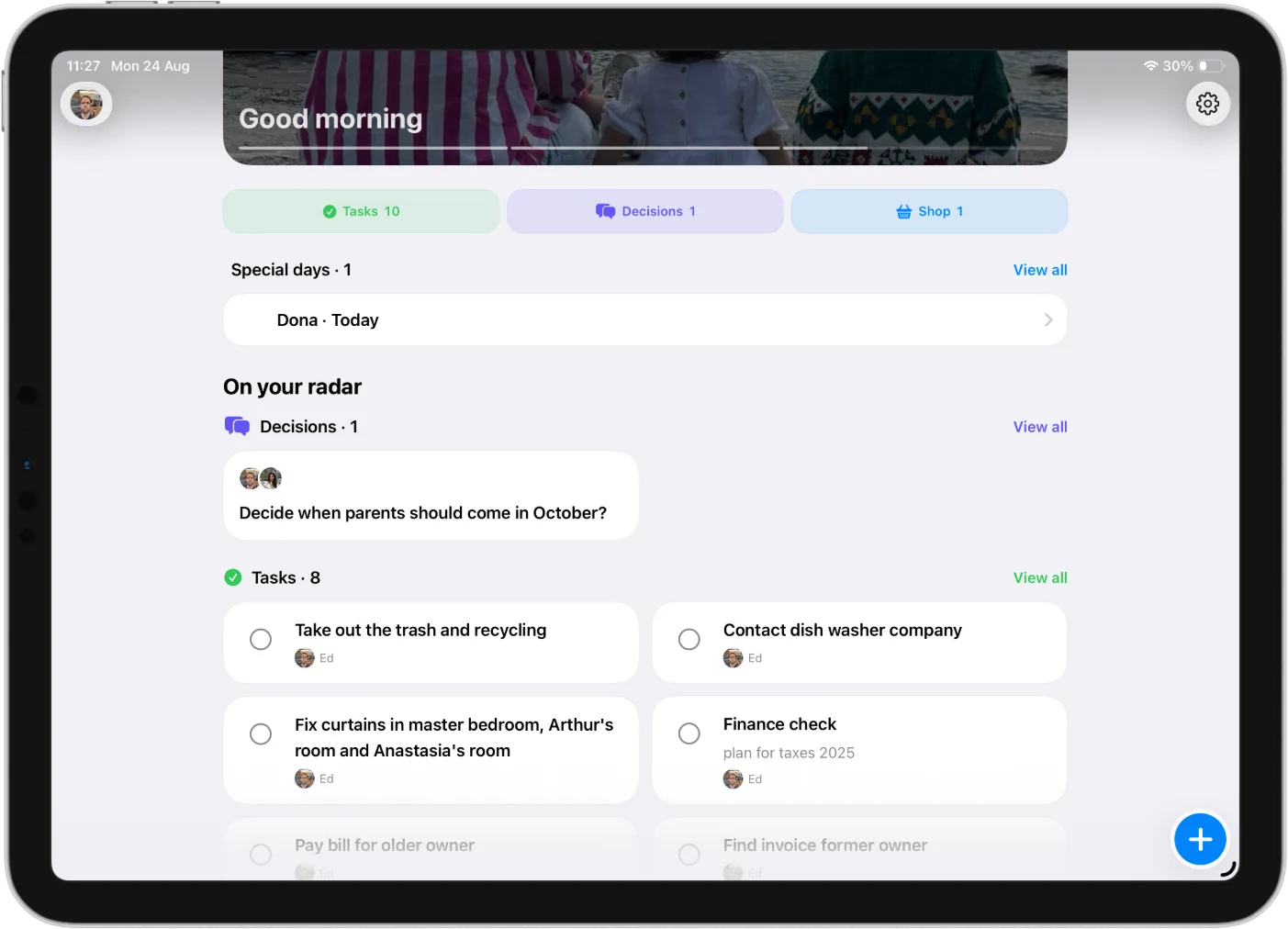
In FamHead, shared tasks, shopping items, and household decisions give you places to record the results of this conversation. Use the mental-load overview to review open task assignments and decisions awaiting input. Keep events on your calendar and put the actions needed around them in FamHead.
A checklist for your next weekly review
Copy or print this checklist and keep it with your weekly calendar.
- Each adult has checked their own commitments and messages.
- We have identified dates that affect someone else.
- Preparation tasks have clear owners.
- Deadlines and handoffs are understood.
- The plan fits this week's availability.
- We have checked supplies before updating the grocery list.
- Open decisions have an outcome or a next step.
- Jobs that can wait have been deliberately postponed.
- Everyone knows where to check the agreed actions.
Use the same agenda next week and adjust the time spent on each part. If the recurring issue is an uneven chore split, revisit how you divide household responsibilities. If groceries keep getting missed, start with a single shared shopping list. For a shorter version for two adults, use the 15-minute household check-in for couples.